


The magic of cinema has always been its ability to draw us into captivating stories, allowing us to feel every emotion and completely immerse ourselves in the world on screen. With the arrival of advanced technologies like Dolby Atmos, this cinematic immersion has reached new heights, transforming the global film experience in ways we never thought possible. In India, a country with a wonderfully diverse film culture, Dolby Atmos isn’t just an enhancement — it’s become necessary to enrich the sensory experience for moviegoers.
Dolby Atmos isn’t just another sound system; it represents a significant leap forward in audio technology, altering our perception of sound within a cinema hall. Unlike traditional sound systems that deliver audio through fixed channels, creating a relatively flat sound field, Dolby Atmos introduces a multi-dimensional approach, allowing sound to envelop the audience in a three-dimensional space. It’s as if the cinema hall comes alive with sound, responding and resonating with the on-screen action. For instance, during an intense action sequence, the sound of a helicopter doesn’t just move from left to right; it hovers above the audience, immersing them in the heart of the action.
Indian cinema is renowned for its grandeur, diverse storytelling, and vibrant music, which heavily rely on creating an emotional connection with audiences. Whether it’s the energy of a popular commercial film or the nuanced performances in an art-house production, sound plays a crucial role in elevating the cinematic experience. Dolby Atmos seamlessly complements the visual spectacle of Indian cinema, ensuring that the soundscape is equally as captivating. In the Indian film industry, where movies are often rich in emotion, drama, and music, Dolby Atmos adds depth to storytelling. Just imagine the thunderous sound of a drum during a climactic scene in a Bollywood blockbuster or the gentle whisper of the wind in an indie film’s quiet, introspective moment. Dolby Atmos ensures that every sound is delivered with precision, intensifying the film’s emotional impact.
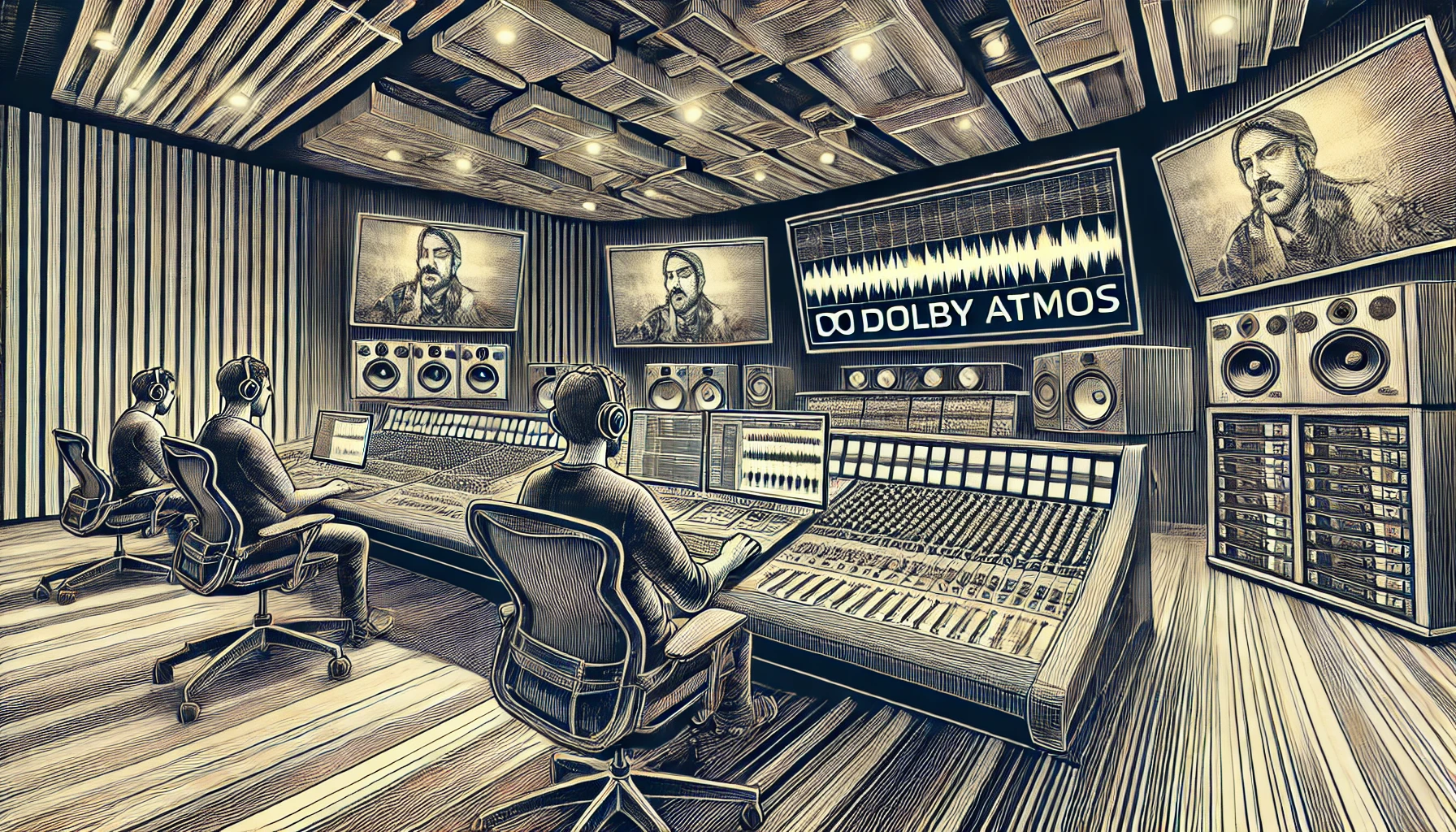
For filmmakers, creating a Dolby Atmos experience is a collaborative journey beyond simply recording sound. The intricate sound design process involves sound engineers and filmmakers working closely together to position each sound in a 3D space during post-production carefully. This process enables filmmakers to craft a more dynamic sound environment, allowing sounds to navigate the space, ultimately enriching the narrative seamlessly. It’s a collaborative effort that respects the filmmaker’s vision, requiring meticulous mixing and careful consideration of how sound interacts with the visuals.
Dolby Atmos treats sounds as “objects” that can be placed and moved within a three-dimensional space. Unlike traditional surround sound systems, in Dolby Atmos, each sound object is independent, enabling it to be positioned anywhere within the sound field. This is made possible through speaker layout and advanced audio processing.
The system utilizes overhead and standard surround speakers to create a sense of height and depth. This results in a more immersive sound experience, allowing the audience to hear sounds from all directions—front, behind, and above. For example, in a Dolby Atmos film, rain doesn’t just emanate from the front speakers; it feels like it’s enveloping you from all sides, creating an incredibly immersive experience.
Selecting the proper theater is crucial for fully appreciating a film with Dolby Atmos. Dolby Atmos-equipped screens feature specialized speakers positioned around the hall and above the audience, forming a cocoon of sound. When choosing a theater, look for the Dolby Atmos logo, indicating that the venue is equipped to deliver this advanced audio experience. In a country where films are often a shared experience, frequently viewed in packed theaters, Dolby Atmos ensures that each viewer, regardless of their seat, enjoys the same high-quality sound. This democratization of sound makes Dolby Atmos particularly relevant in India, where cinema holds a deep place within society.
Dolby Atmos isn’t just a local phenomenon; it has become part of the global standard for premium cinematic experiences. The technology is used in significant cinemas globally, from Hollywood blockbusters to international indie films. By embracing Dolby Atmos, Indian cinemas and filmmakers align with international movie viewing standards, ensuring that Indian audiences savor the same high-quality experiences as their counterparts worldwide.
Dolby Atmos is a game-changer for the Indian film industry, elevating the cinematic experience to unprecedented heights. Dolby Atmos has become an indispensable tool in the filmmaker’s arsenal, creating more immersive and emotionally resonant films for a country that celebrates cinema in all its forms. As more theaters across India embrace this technology, audiences can eagerly anticipate experiencing cinema in a richer, deeper, and more engaging way.