


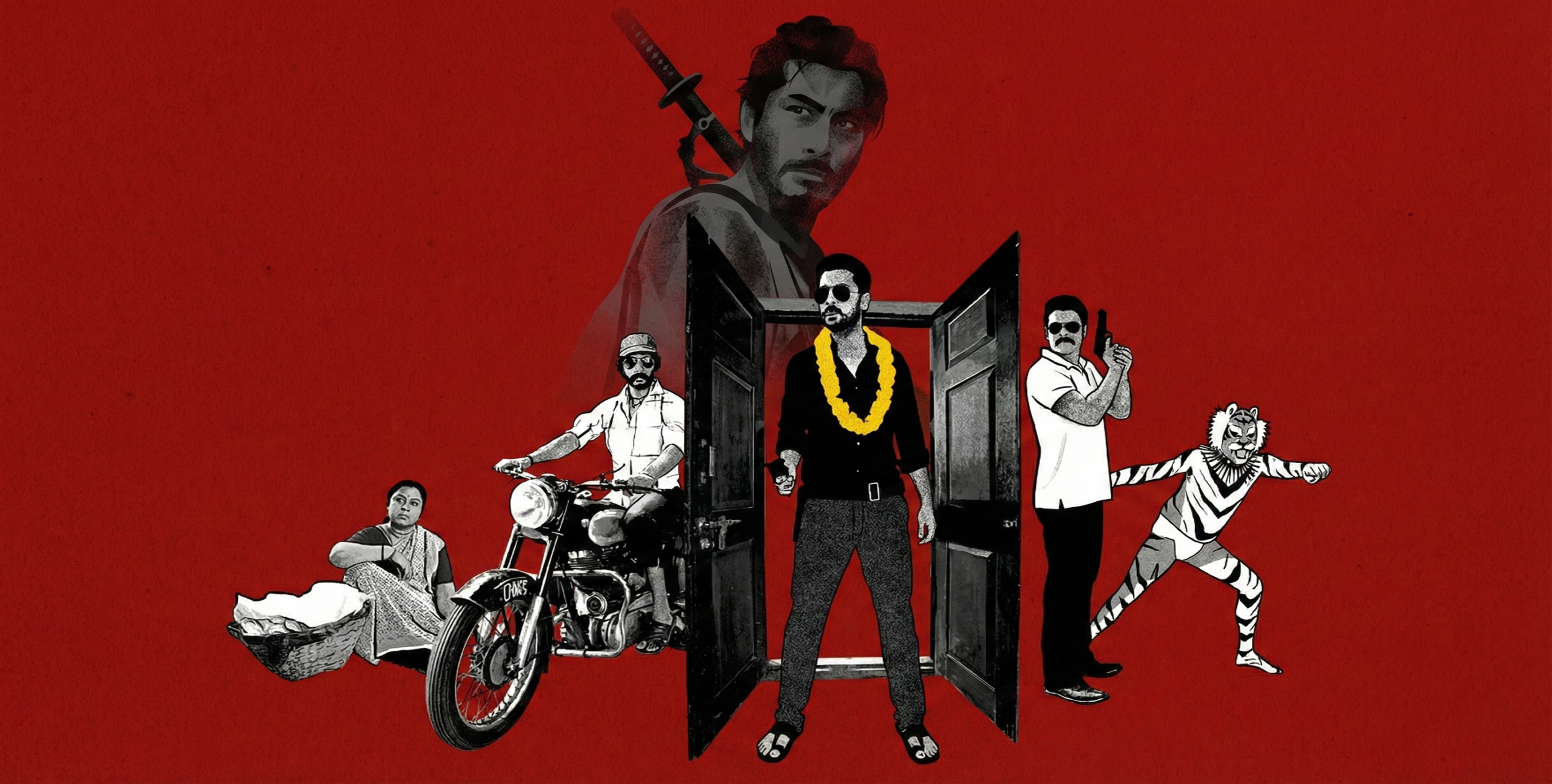
Back in 2013, when Facebook timelines still mattered, when Kannada films were beginning to find confidence again after a long, uneven stretch, and when Kannada audiences were still figuring out their “online” voice, a four-minute trailer of Rakshit Shetty‘s Ulidavaru Kandante appeared and quietly unsettled Kannada cinema.
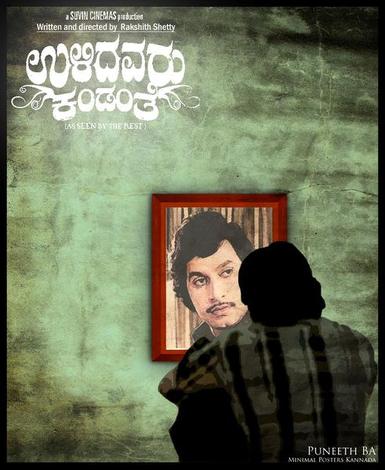
For many filmgoers, after Simple Agi Ond Love Story and Lucia, it became clear that something else was stirring in Kannada cinema, a small but rare reminder that the industry could still surprise itself. Until then, coastal Karnataka on screen had largely functioned as shorthand. Accents were stretched for humour, and locations existed mainly as texture or flavour. Ulidavaru Kandanthe made a bold choice to let the language remain intact and the culture unsoftened. Perhaps for the first time in a long while in KFI, here was a film that trusted its world enough to let viewers come to it on their own terms.
Ulidavaru Kandante felt like a film meant for clean sound, steady projection, and an attentive room, and I remember eagerly booking tickets for the release-day show for my family and myself at a nearby multiplex, which was a big deal for most of us back then. To my surprise, the theatre did not quite know how to engage with this film. People laughed when jokes landed cleanly through subtitles, and of course there was applause when a familiar song surfaced. But the room never fully aligned with what the film was attempting. The narrative did not move in straight lines, and the idea that the same incident could fracture into different emotional truths did not immediately register.
Living through those moments of collective confusion stayed with me longer than the film itself, as a quiet unease. It made me wonder how we receive unfamiliar forms. How much patience we offer before asking a film to explain itself. Whether novelty excites us, or simply exhausts us.
I remember feeling a similar unease much earlier while watching Rashomon, a confusion that only made sense to me later while watching Ulidavaru Kandanthe, given how closely it draws from that narrative structure. Beyond the novelty of multiple retellings and the brilliance in weaving everything together, the Rashomon “effect” lies in pressure: the pressure to decide what happened, to choose a version and call it the truth. Each account carries its own conviction, even the one that claims neutrality. The film offers no reward in the form of clarity. Instead, it leaves the viewer with fragments, slowly aware of their own role in arranging them.
As critic Roger Ebert (quoting Kurosawa’s autobiography) observed, Rashomon deals with the fact that human beings are unable to be honest with themselves about themselves.. The discomfort comes not from ambiguity itself, but from the urge to collapse it into something reassuring. Kurosawa places the audience in a position usually reserved for judgment, then refuses to make that task easy. David Bordwell notes that such narratives ask for patience rather than mastery, while Pauline Kael suggests that some films require the viewer’s surrender more than their understanding. That demand is quietly exhausting, especially in a communal space. Ulidavaru Kandanthe inherits this burden. Beyond its coastal specificity, the deeper disturbance is structural: perspective keeps shifting, sympathy never settles, and the ground keeps moving beneath you.
This way of unsettling the viewer has travelled widely, often wearing different forms. Citizen Kane circles its subject through competing memories, never fixing the man in place, less interested in who Kane was than in why everyone needed him to mean something different. In Hiroshima Mon Amour, memory itself begins to fray, treated as erosion rather than recall, until certainty dissolves under emotional weight. Persona takes this even further, letting perspective collapse and identity blur, leaving the viewer unsure not only of events, but of who is experiencing them. American cinema later absorbed these impulses in more accessible forms: Reservoir Dogs keeps the truth off-screen entirely, Memento traps the audience inside cognitive limitation, and even something as apparently playful as Vantage Point reveals how fragile meaning becomes once perspective is allowed to shift.
Indian cinema has approached these ideas unevenly, but with persistence. Virumaandi worked because Kamal Haasan anchored narrative instability in emotional conviction; audiences may not have agreed on what happened, but they understood why each version mattered. Talvar benefited from cultural proximity, organising contradictions the audience already carried with them. Films like Aayitha Ezhuthu/Yuva softened the approach, refracting a single incident through social position rather than moral conflict, while thrillers such as Ittefaq used conflicting accounts mainly as momentum. Much earlier, Andha Naal was rejected for denying familiar comforts, only to be understood later, following a pattern seen everywhere. Ulidavaru Kandanthe sits firmly in this lineage, carrying both the ambition and the risk.
The pattern, across industries, is fairly consistent. Films built on uncertainty tend to be embraced by critics and festivals, while their theatrical fate depends on framing and expectation. Sell them as puzzles, and audiences lean in. Sell them as importance, and they brace themselves. But none of this guarantees understanding, or even enjoyment. Maybe that is the risk these films accept. They do not aim for consensus. They allow partial connection and trust that time will do some of the work the first audience could not. Even Rashomon was embraced internationally before being fully accepted at home, and Kurosawa himself worried he had failed to communicate clearly. History eventually proved otherwise.
Fortunately, like Rashomon, Ulidavaru Kandanthe eventually found its audience in this way, through rewatches, conversations, and viewers encountering it without the weight of expectation. But what stays with me from that 2014 screening is not disappointment so much as a question that keeps reopening: how much uncertainty are we willing to sit with, together, in a dark room? And what happens when a film asks us to participate not by cheering or clapping, but by doubting, quietly and uneasily, our own version of what we just saw?
There is no answer. And maybe that is why Ulidavaru Kandanthe still feels unfinished to me. Not unresolved. Just still in the room, waiting.
