


Movie: Unda
Director: Khalid Rahman
Lead Actor: Mammootty
Genre: Drama, Action
Setting: Chhattisgarh, India
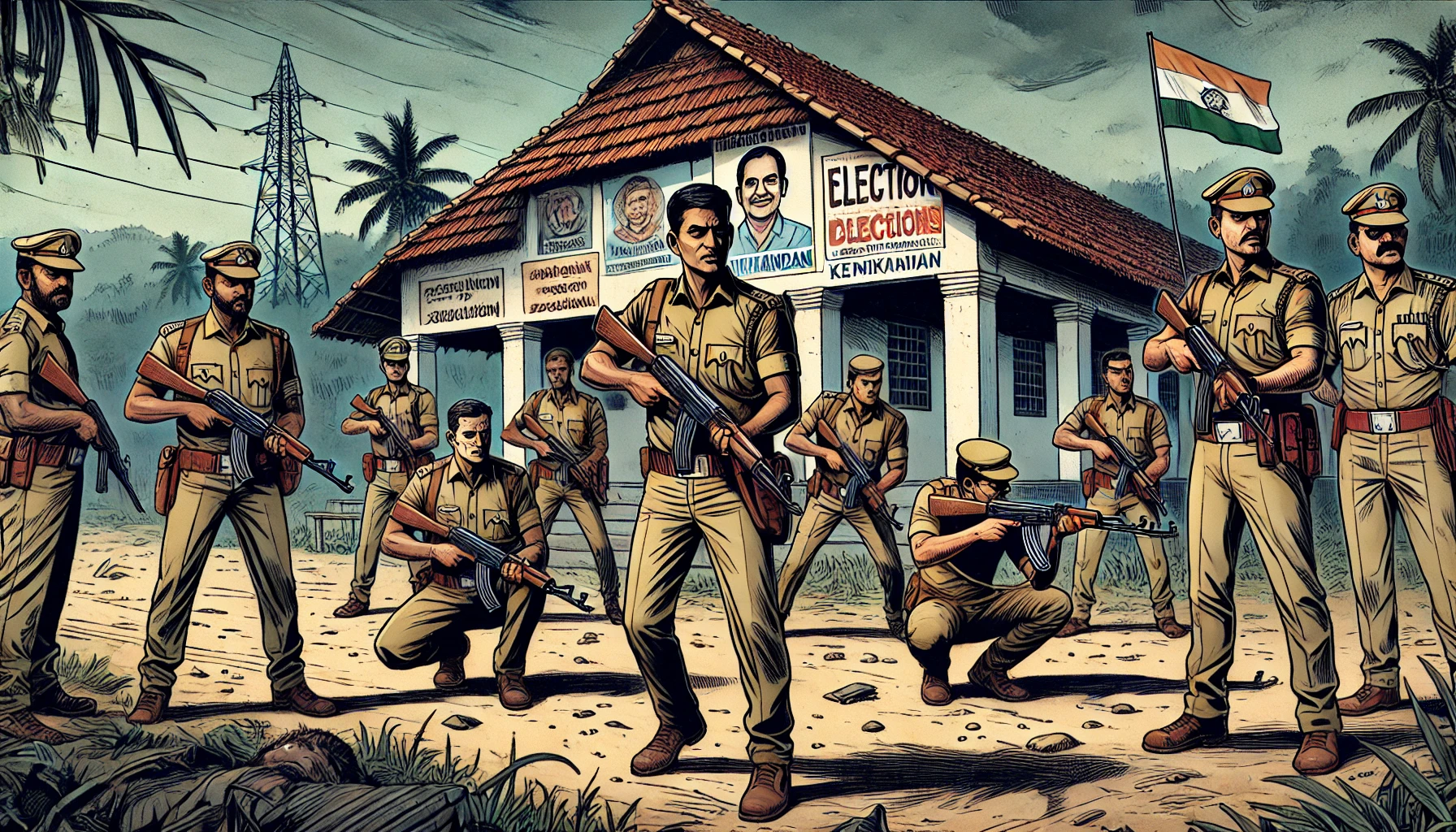
Plot Summary: Follows a group of Kerala police officers sent to Chhattisgarh for election duty, who face challenges from Naxalite insurgents and internal fears.
Themes: Duty, fear, human vulnerability, institutional inefficiency
Cinematography: Sajith Purushan; features muted tones and desolate landscapes to emphasize isolation
Character Focus: Sub-Inspector Manikandan (played by Mammootty), portrayed with subtlety and depth
Notable Aspects: Realistic portrayal of police officers, criticism of resource inadequacies and bureaucratic inefficiencies
Pacing: Some unevenness, with a slow build-up and occasional narrative inertia
Mammootty-starrer Unda defies the conventional trappings of an action drama, offering instead a nuanced exploration of human vulnerability and institutional inefficiency. Directed by Khalid Rahman, the film delves into the psyche of police officers stationed in a conflict-ridden area, revealing the fragility and complexity that lie beneath the surface of those who are often seen as symbols of power and authority.
At its core, Unda is a meditation on the nature of duty and the existential fears that accompany it. The film’s title, which translates to “bullet” in Malayalam, serves as both a literal and metaphorical reference to the ammunition—or lack thereof—that drives the narrative. The plot revolves around a group of Kerala police officers sent to Chhattisgarh for election duty. As they find themselves in a dangerous and unfamiliar terrain, the officers, led by Sub-Inspector Manikandan (Mammootty), must confront the external threats posed by Naxalite insurgents and their internal fears and inadequacies. These officers are not larger-than-life heroes but ordinary men, making their struggles and fears all the more relatable.
Rahman’s directorial approach is characterized by its restraint and subtlety. He eschews the bombast and bravado often associated with police dramas, opting instead for a more realistic and grounded portrayal of the challenges faced by the officers. This realism is evident in how the film handles the theme of fear. The officers are not portrayed as invincible heroes; they are shown as ordinary men terrified of facing armed insurgents with inadequate resources. This fear is not just of physical harm but of failure—failure to fulfill their duty, to protect themselves, and to protect the citizens they serve.
The film’s cinematography, helmed by Sajith Purushan, is crucial in reinforcing this sense of vulnerability. The vast, desolate landscapes of Chhattisgarh, captured in muted tones, starkly contrast the lush, vibrant settings often associated with Kerala. This visual juxtaposition underscores the alienation and isolation the officers feel, who are out of their depth in this hostile environment. The camera lingers on the officers’ faces, capturing the anxiety and uncertainty that pervade their thoughts. Unda transcends its narrative in these moments of stillness, becoming a profound commentary on the human condition.
Mammootty’s portrayal of Manikandan is a masterclass in understated acting. His performance is devoid of the usual swagger that one might expect from a police officer in an action film. Instead, Mammootty imbues Manikandan with quiet dignity and vulnerability, making him relatable and sympathetic. Manikandan is not a larger-than-life figure; he is an everyman, grappling with the same fears and doubts that any ordinary person would face in such a situation. This portrayal is a testament to Mammootty’s versatility as an actor and his ability to bring depth and nuance to his characters.
However, Unda has its challenges. The film’s pacing, particularly in the second half, sometimes feels uneven. While the slow build-up effectively establishes the characters and their predicament, it also leads to a sense of inertia that occasionally hampers the narrative momentum. Some supporting characters could have been more fleshed out, as their struggles and motivations remain underexplored. These shortcomings, however, do not significantly detract from the film’s overall impact.
What sets Unda apart from other films in its genre is its refusal to offer easy answers or resort to clichés. The film does not glorify violence or portray the officers as infallible protectors of the law. Instead, it presents a realistic and empathetic portrayal of their struggles, highlighting the systemic failures and bureaucratic inefficiencies that contribute to their predicament. Unda’s critique of institutional inefficiency is a revelation, challenging the audience to reconsider their preconceived notions about law enforcement and the impact of these shortcomings on the morale and effectiveness of the officers.
In a broader sense, Unda can be seen as a reflection of the fragility of human institutions and the vulnerability of those who operate within them. The film underscores the idea that behind every uniform is a human being, with all the fears, insecurities, and doubts that come with it. This humanization of the police force is both a strength and a revelation, challenging the audience to reconsider their preconceived notions about authority figures.
In conclusion, Unda is a film that resonates on multiple levels— as a gripping drama, as a critique of institutional inefficiency, and as a profound exploration of human fear and vulnerability. Khalid Rahman has crafted a film that is both thought-provoking and emotionally engaging. Unda’s emotional engagement is a testament to its ability to connect with the audience, offering a fresh perspective on the police genre. For those willing to look beyond the surface, Unda offers a rich and rewarding cinematic experience, one that lingers long after the credits roll.